Brandon Franks Pottery Brandon Franks Pottery
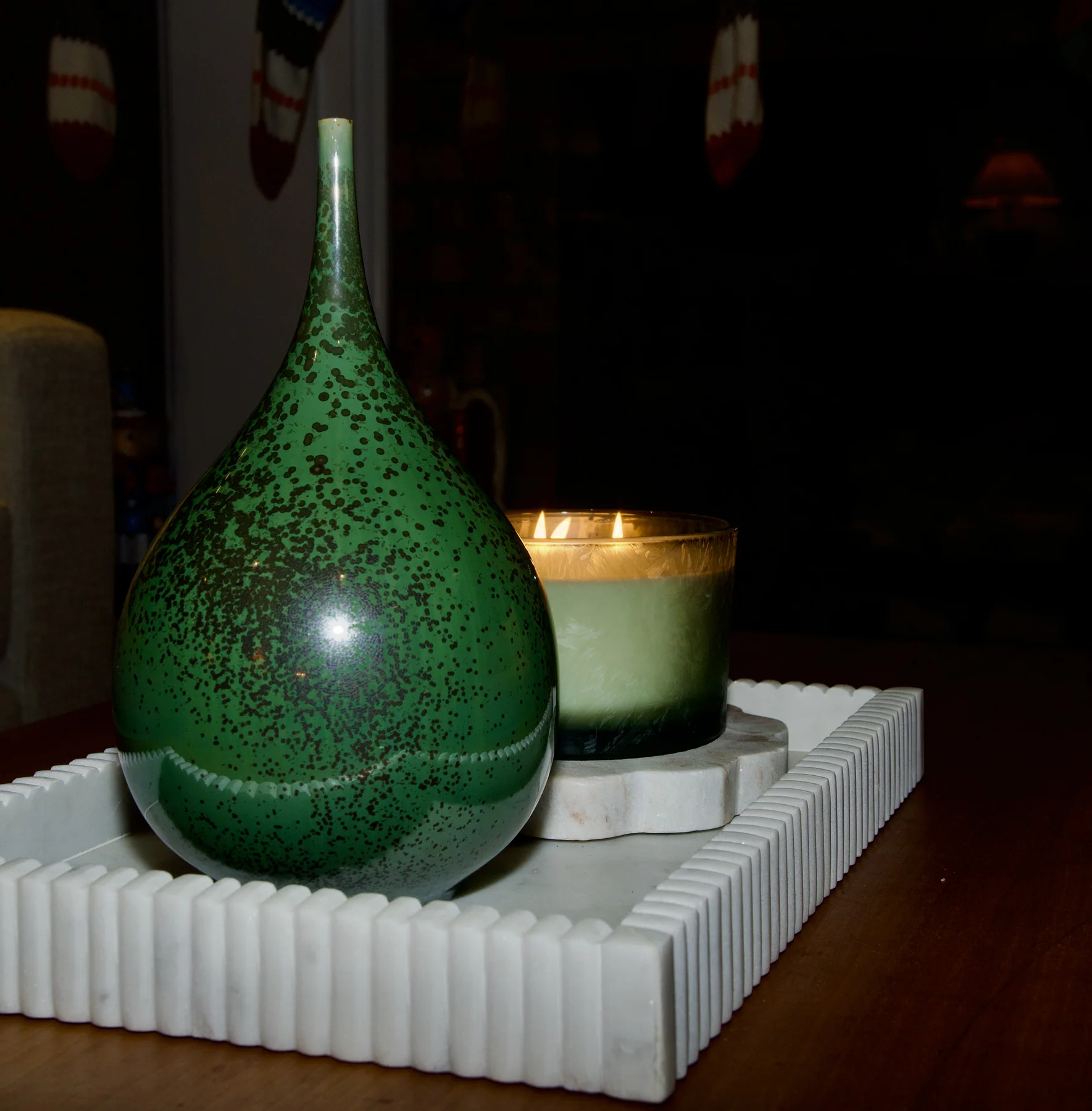
Dark green handmade crystalline pottery vase with speckled glaze by Brandon Franks

Crystalline Ceramics

Brandon Franks Pottery

Handmade Crystalline Pottery

Scroll
Large handmade gourd-shaped ceramic vase covered in tan and blue zinc silicate crystalline glaze by Brandon Franks

About Brandon

My name is Brandon Franks, and I am a pottery artist specializing in crystalline glazes, some of the rarest and most technically demanding forms of ceramics.

I started throwing pottery when I was nine years old. Even then, I was drawn to the quiet rhythm of working with clay and the way something pulled from the earth could become beautiful and functional in a single afternoon. I began selling my work in 2017, and by 2019 I had fully committed to crystalline glazing. It has shaped everything I have made since.

Crystalline work keeps me humble. It requires constant testing, refining glaze formulas, adjusting firing schedules, and learning how to guide chemistry that never behaves the same way twice. It has taught me patience, precision, and respect for the unexpected. Some of the most striking results are the ones that emerge just beyond what I thought I was aiming for.

Each piece that leaves my studio is completely unique. It has never existed before, and it never will again.

Crystalline Glazes

What you see on each piece are real crystals — grown inside the glaze during firing, not painted on, not printed, not applied. They form the way snowflakes form: from chemistry, in conditions carefully prepared but never fully controlled. Crystalline glazing is one of the most technically demanding processes in ceramics, and every single piece that emerges from the kiln is genuinely unrepeatable.

01

The Glaze Formula

Crystalline glaze begins with zinc oxide and silica. When everything is balanced just right, those two materials bond and grow into zinc silicate crystals. Color comes from metal oxides added in small, careful amounts. Cobalt creates blues, iron brings ambers and greens, copper leans toward turquoise. Each color requires its own formula. There is no universal recipe. The chemistry has to be exact. If it is even slightly off, the crystals will not grow at all.

02

The Firing

The kiln climbs past 2,300°F, turning the glaze into a molten liquid. That is only the beginning. What matters most is what happens next. The temperature is slowly lowered and then held at very specific points, sometimes for hours at a time. This gives the zinc silicate molecules space to move, connect, and form crystals. A shift of only a few degrees can change everything. Too hot or too cool, and the crystals may not develop. Or they may grow in ways no one expected. Each firing takes between twelve and eighteen hours, and there is no rushing it.

03

The Finish

At peak temperature, crystalline glaze becomes so fluid that it would run straight off the pot if left alone. Every piece is fired inside a handmade catch basin that collects the excess glaze as it flows. After the kiln cools, that basin is carefully cut away with a diamond wheel and the base is ground smooth by hand. What remains is the surface that formed inside the kiln. The crystals can stretch several inches across, with intricate radial patterns that become even more striking up close. No two pieces ever come out the same.

Handmade teardrop-shaped ceramic vase with dense cobalt blue zinc silicate crystalline glaze by Brandon Franks

I set the conditions. The crystals decide the rest.

After years of developing glazes and refining kiln schedules, I've learned to work with uncertainty rather than against it. I know what conditions tend to grow large crystals, what oxides shift color at certain temperatures, what cooling rates produce finer or coarser structure. But I can't dictate the outcome. Every firing is a collaboration — part chemistry, part craft, part chance.

That tension between precision and surprise is what keeps this work interesting. It's why no two pieces in my studio have ever looked the same, and why I'm still learning after years at the wheel and the kiln.

Own a Piece

Each piece is one of a kind. Browse available work and inquire about commissions in my Etsy shop.

Visit the Shop

From the Studio

What is Crystalline Pottery

Crystalline pottery is one of the rarest and most technically demanding forms of ceramic art — a discipline where chemistry, fire, and patience converge to grow real zinc silicate crystals inside the glaze. Unlike most pottery glazes, which dry to a uniform surface, crystalline glazes form macrocrystalline structures that can span several inches across a single piece.

Read: What is Crystalline Pottery

Inside the Cone 8 Firing Process

Every crystalline piece I make goes through a precisely controlled Cone 8 firing — a 12 to 18 hour process where temperature is everything. The climb to peak heat melts the glaze into a liquid flux, and then the real work begins: a slow, deliberate descent through the crystal-growth window, held for hours at temperatures only a few degrees wide.

Read: Inside the Cone 8 Firing Process

How Every Crystal Is Unique

No two crystalline pots have ever looked the same, and no two ever will. The crystals that grow inside my glazes form through a process governed by chemistry but shaped by chance — the same way snowflakes are identical in structure yet never in pattern. Understanding why requires looking at the microscale events that unfold inside a kiln in the dark.

Read: How Every Crystal Is Unique

Get In Touch